
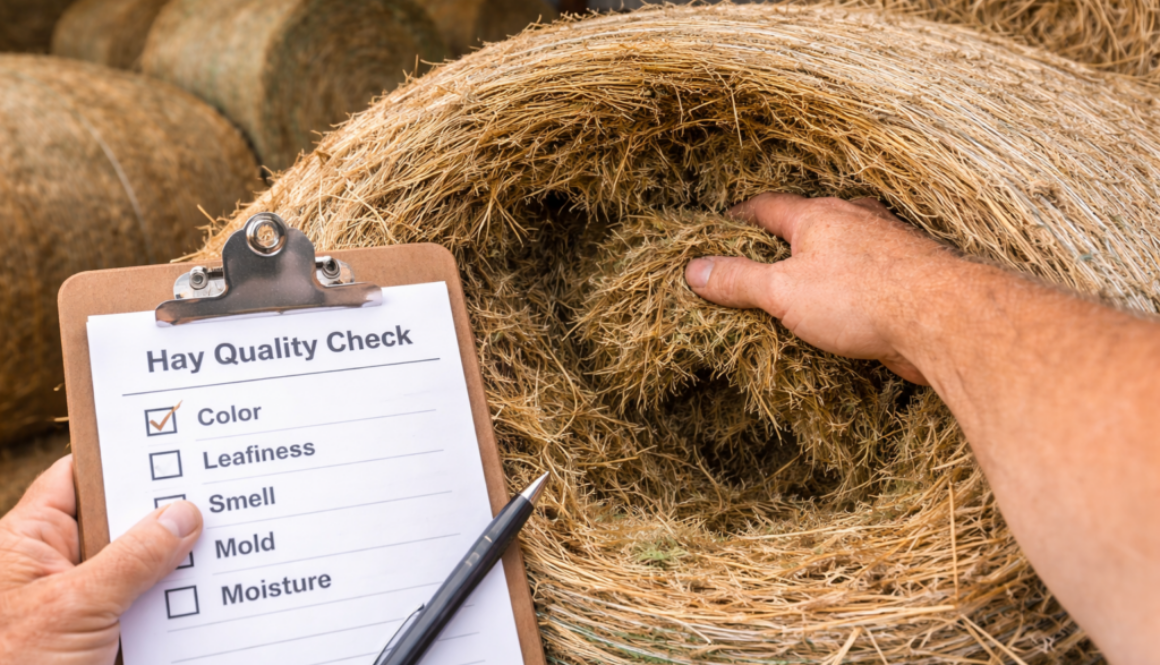
How to Choose Hay When You Don’t Know the Cutting Date
Not knowing the cutting date is common when buying hay — especially during shortages or when sourcing from new suppliers. While cutting date provides valuable context, it’s not the only indicator of hay quality.
Experienced buyers rely on physical clues, consistency, and animal response to judge whether hay will perform well as feed. Here’s how to choose hay confidently when the cutting date is unknown.
Why Cutting Date Matters — and Why It’s Not Everything
Cutting date helps estimate:
- Plant maturity
- Fiber content
- Digestibility
- Expected protein levels
However, weather conditions, drying speed, and storage practices often influence quality more than the calendar date.
According to USDA, forage maturity at harvest is a stronger predictor of feed value than harvest date alone.
1. Look Closely at Color
Color offers the first visual clue.
Good-quality hay typically appears:
- Green to light green
- Uniform in color
- Free of excessive browning or bleaching
Warning signs include:
- Gray or black patches (possible mold)
- Yellow or straw-colored hay (overmature or weathered)
- Dark brown hay (heat damage)
Color alone isn’t decisive, but it sets expectations.
2. Check Leaf-to-Stem Ratio
Leaves contain most of the nutrients.
High-quality hay usually has:
- Plenty of intact leaves
- Fine, flexible stems
- Minimal shattered material at the bottom of the bale
Overly stemmy hay often indicates late cutting, regardless of the date.
3. Feel the Texture
Use your hands.
Hay should feel:
- Dry but pliable
- Not brittle or dusty
- Free of damp or slimy areas
Excessively coarse or woody stems reduce intake and digestibility.
4. Smell the Hay
Your nose detects problems faster than lab tests.
Healthy hay smells:
- Fresh
- Slightly sweet
- Clean and neutral
Avoid hay that smells:
- Musty
- Sour
- Sharp or ammonia-like
Unpleasant odors usually indicate mold, heating, or spoilage.
5. Inspect the Inside of the Bale
Surface appearance can be misleading.
Always:
- Open a bale
- Check the core
- Look for moisture pockets or mold
Hidden internal damage can exist even in hay that looks good from the outside.
6. Ask the Right Questions (Even Without Dates)
If cutting date isn’t available, ask about:
- Bale moisture at harvest
- Storage method (inside vs. outside)
- Hay species and variety
- Whether preservative was used
Clear answers often signal a knowledgeable and careful producer.
7. Observe Animal Acceptance
Livestock tell the truth.
High-quality hay is:
- Eaten readily
- Consumed with minimal waste
- Associated with steady performance
If animals sort through or refuse hay, quality issues likely exist — regardless of cutting date.
When Lab Testing Makes Sense
If buying large quantities or feeding high-value animals, forage testing provides clarity.
A basic test reveals:
- Protein
- Fiber
- Energy estimates
This is especially useful when visual cues are mixed or uncertain.
Final Thoughts
A missing cutting date doesn’t mean poor hay. By focusing on plant maturity indicators, physical condition, and animal response, buyers can make informed decisions without relying on a calendar.
Quality hay proves itself — in the bale and at the feed bunk.
External References
- USDA Forage Quality Evaluation Resources
- University Extension Hay Buying Guides