
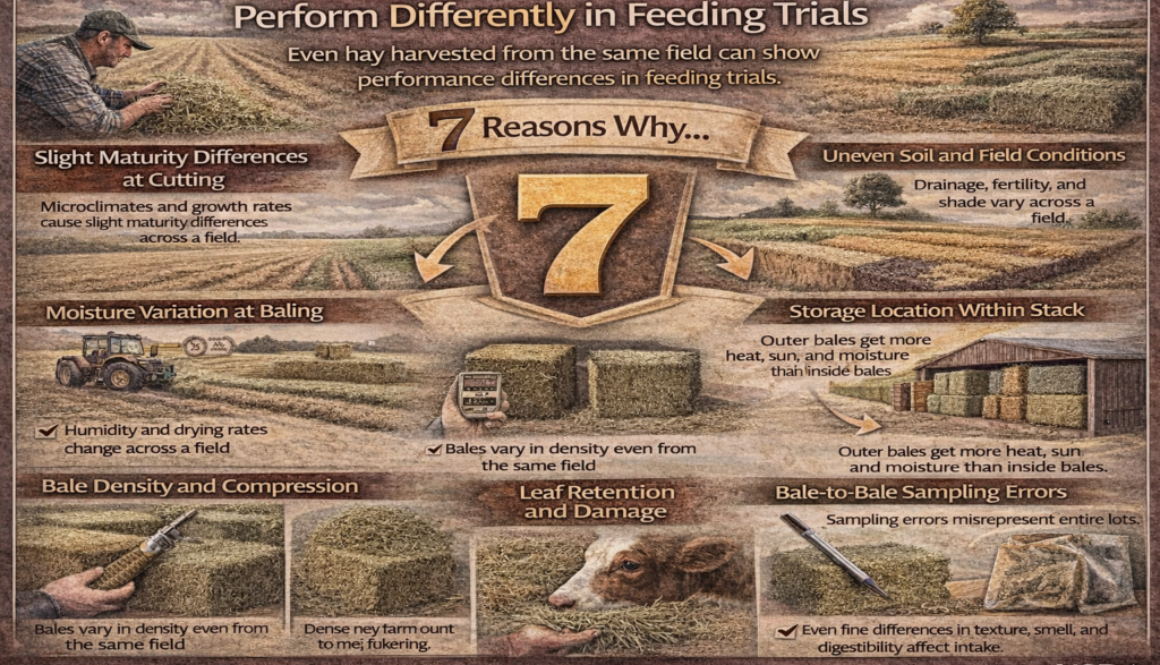
Why Hay From the Same Field Can Perform Differently in Feeding Trials.
It surprises many buyers: two loads of hay harvested from the same field can produce noticeably different results in feeding trials. Intake shifts, weight gain changes, milk output varies, or sorting increases — even though the hay supposedly came from identical ground.
The reality is simple: “same field” does not mean identical forage.”
What Feeding Trials Reveal That Visual Inspection Doesn’t
Feeding trials measure:
- Voluntary intake
- Digestibility
- Feed conversion efficiency
- Animal performance over time
Small differences in harvest timing or handling often show up clearly in trial results.
According to USDA, forage maturity and moisture at harvest influence digestibility more than location alone.
1. Slight Differences in Maturity at Cutting
Even within the same field:
- Some sections mature faster
- Slight delays in cutting create variation
- Microclimates affect growth rates
Hay cut just a few days later may:
- Contain more lignin
- Have thicker stems
- Deliver lower digestible energy
Animals often detect these differences quickly.
2. Uneven Soil and Field Conditions
Fields are rarely uniform.
Variability may occur due to:
- Soil fertility differences
- Drainage patterns
- Compaction zones
- Shade variation
- Fertilizer distribution patterns
These factors influence plant growth and nutrient density.
3. Moisture Variation at Baling
Even if harvested on the same day:
- Windrow thickness may vary
- Drying rates differ across the field
- Humidity shifts during baling
Moisture variation affects:
- Heating risk
- Leaf retention
- Long-term nutrient stability
Small moisture differences often compound during storage.
4. Bale Density and Compression Differences
Bales from the same field can vary in:
- Density
- Internal airflow
- Cooling speed
Denser bales:
- May trap residual heat
- Age differently
- Lose palatability over time
Feeding trials expose these differences quickly.
5. Leaf Retention and Handling Damage
Handling impacts performance.
If some bales:
- Were raked more aggressively
- Were transported multiple times
- Experienced rough stacking
they may lose more leaves and digestible nutrients.
6. Storage Location Within the Stack
Even identical hay behaves differently based on storage.
Bales stored:
- Near walls
- Near moisture sources
- On the outer stack edges
often age differently than protected center bales.
7. Bale-to-Bale Sampling Errors
When hay is tested:
- Samples may not represent the entire lot
- Leafy bales may bias results
- Variability may go undetected
Feeding trials average real-world performance across the lot.
Why Animals Notice Differences Before Buyers Do
Livestock respond to:
- Texture
- Smell
- Digestibility
- Mouthfeel
They instinctively adjust intake based on forage comfort and nutrient availability.
Even subtle changes affect feeding behavior.
How Buyers Can Reduce Same-Field Variability Risk
- Inspect multiple bales from different stack areas
- Ask about harvest timing and weather during cutting
- Check moisture consistency
- Separate lots by cutting date
- Avoid mixing early and late harvest sections
Consistency begins with careful lot management.
Why Premium Suppliers Manage Fields in Sections
Professional suppliers often:
- Harvest fields in stages
- Keep lots separated
- Monitor moisture continuously
- Label bales by cutting
This reduces variability in feeding performance.
Final Thoughts
“Same field” sounds reassuring — but feeding performance depends on maturity, moisture, handling, and storage more than geography. Buyers who understand this avoid surprises and manage expectations more realistically.
In forage systems, small harvest differences create measurable performance changes.
External References
- USDA Forage Maturity and Digestibility Research
- University Extension Feeding Trial and Forage Variability Studies
