
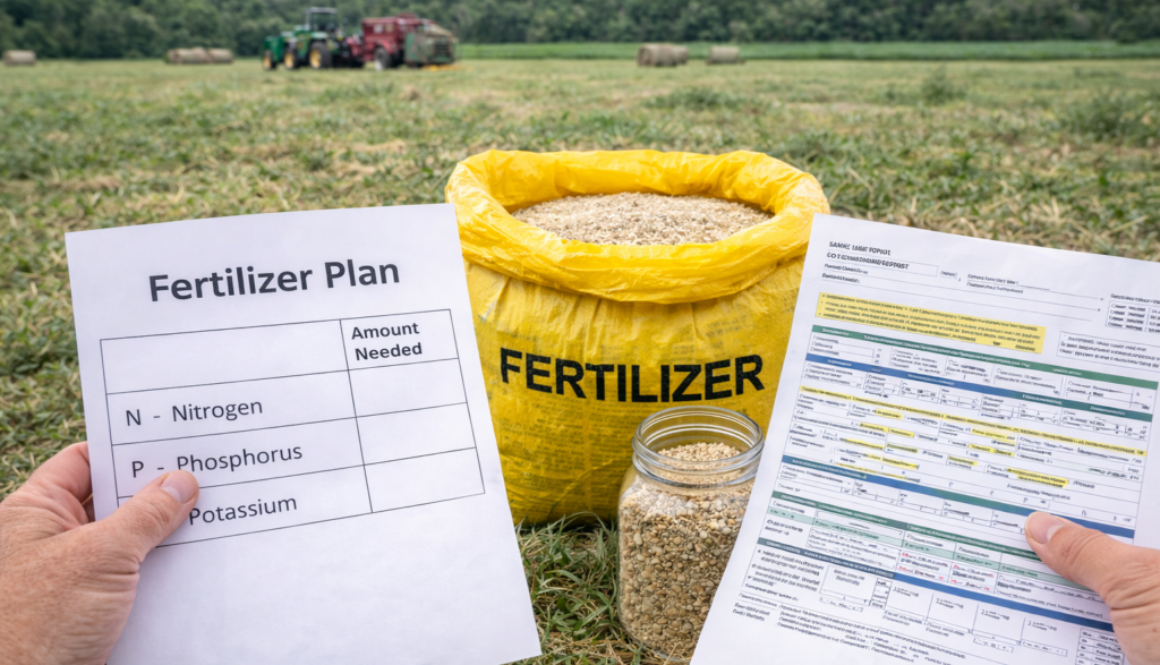
How to Manage Hayfields When Fertilizer Prices Keep Rising
Fertilizer has become one of the largest — and most volatile — expenses in hay production. As prices climb, many producers are forced to rethink how they manage hayfields without sacrificing yield, stand health, or forage quality.
The good news: smarter nutrient management can often offset higher costs while improving long-term field performance.
Why Fertilizer Prices Hit Hay Producers Hard
Hay systems require:
- Repeated nutrient removal with each cutting
- Regular nitrogen, phosphorus, and potassium inputs
- Long-term soil fertility maintenance
Unlike grain crops, hay removes nutrients multiple times per season, making fertilizer efficiency critical when prices rise.
According to USDA, fertilizer represents one of the fastest-growing input costs in forage production.
1. Start With Soil Testing (Every Time)
Soil testing is the foundation of cost control.
Benefits include:
- Avoiding unnecessary applications
- Identifying nutrients already at adequate levels
- Targeting only what the field truly needs
Skipping soil tests often leads to over-application — wasting money without increasing yield.
2. Prioritize Nutrients That Drive Yield
When budgets are tight, not all nutrients deserve equal attention.
General priorities:
- Nitrogen (N): Drives yield and regrowth
- Potassium (K): Supports stand longevity and stress tolerance
- Phosphorus (P): Important but often over-applied in older hayfields
Maintaining potassium is especially critical in multi-cut hay systems.
3. Match Fertilizer Rates to Realistic Yield Goals
Applying fertilizer for unrealistic yield targets wastes money.
Consider:
- Historical yields
- Soil type
- Rainfall patterns
- Stand age and density
Fertilizer should support achievable production, not best-case scenarios.
4. Improve Nutrient Use Efficiency
Small management changes can stretch fertilizer dollars.
Timing Matters
- Apply nutrients when plants can actively use them
- Avoid late-season nitrogen that won’t be recovered in yield
Placement Matters
- Reduce surface losses where possible
- Avoid applications before heavy rainfall
5. Use Legumes to Reduce Nitrogen Needs
Legumes can significantly cut fertilizer costs.
Benefits include:
- Natural nitrogen fixation
- Improved forage quality
- Reduced dependence on purchased N
Maintaining healthy legume populations often costs less than replacing nitrogen with fertilizer.
6. Protect Soil Health to Protect Fertility
Healthy soils hold and recycle nutrients better.
Focus on:
- Preventing compaction
- Maintaining organic matter
- Encouraging strong root systems
Poor soil structure increases nutrient loss and reduces fertilizer efficiency.
7. Reduce Nutrient Losses After Application
Nutrients are wasted when lost to:
- Runoff
- Leaching
- Volatilization
Simple steps like proper timing, avoiding saturated soils, and maintaining ground cover help keep nutrients where plants can use them.
8. Accept Strategic Trade-Offs
In some seasons, maintaining stand health may matter more than maximizing yield.
Reducing cutting frequency or skipping marginal applications can preserve fields until input prices stabilize.
Final Thoughts
Rising fertilizer prices force tougher decisions — but they also reward smarter management. By focusing on soil testing, nutrient efficiency, and realistic goals, hay producers can protect profitability without sacrificing field health.
Efficient fertility management isn’t about using less fertilizer — it’s about using it better.
External References
- USDA Forage Fertility Management Resources
- University Extension Hay Fertilization Guides