
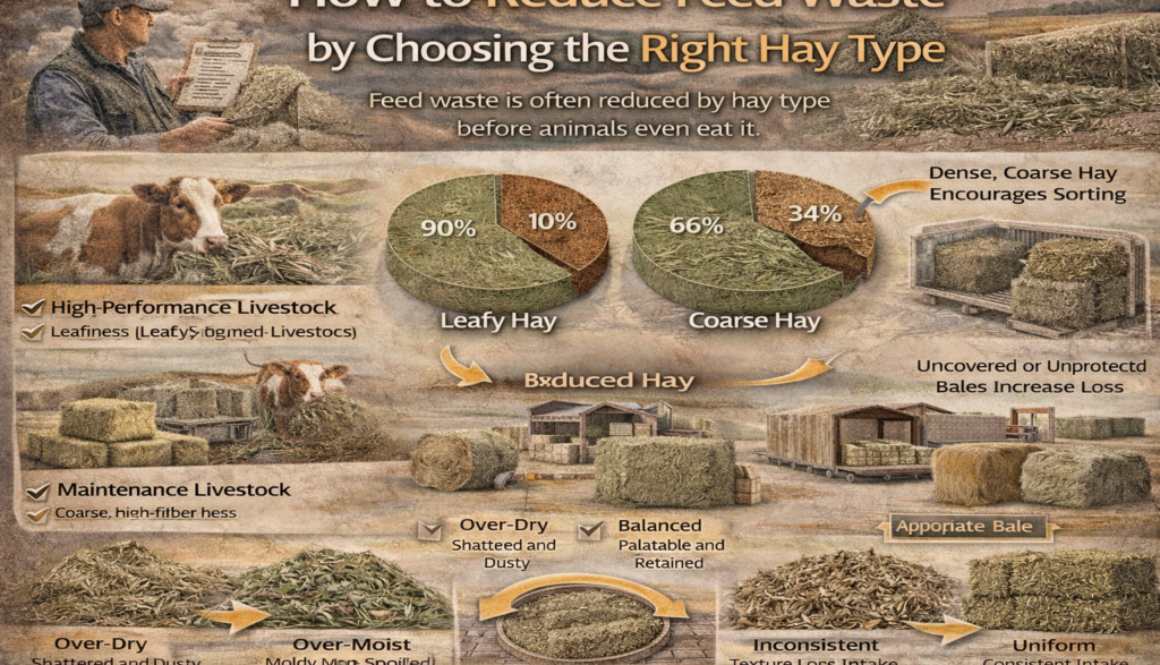
How to Reduce Feed Waste by Choosing the Right Hay Type.
Feed waste doesn’t just happen in the feeder — it often begins at the buying decision. Even well-managed feeding systems struggle when hay type doesn’t match animal needs, feeding method, or performance goals.
Choosing the right hay type is one of the most effective ways to reduce waste, improve intake, and lower total feeding costs.
Why Feed Waste Is a Hay Selection Problem
Feed waste is commonly blamed on:
- Poor feeder design
- Animal behavior
- Environmental conditions
But in many cases, the real cause is mismatch between hay characteristics and animal requirements.
According to USDA, hay refusal and sorting account for a significant portion of on-farm feed losses — often exceeding storage losses.
Different Hay Types Behave Differently in Feeders
Hay type affects:
- Palatability
- Chewing time
- Sorting behavior
- Trampling losses
- Intake consistency
Not all hay is equally suited for every feeding situation.
1. Match Hay Type to Animal Class
Animals have different needs.
- Young, pregnant, or high-performance animals need softer, leafier hay
- Maintenance animals tolerate coarser hay
- Horses prefer clean, low-dust, moderate-fiber hay
Feeding overly coarse hay to sensitive animals increases refusal and waste.
2. Avoid Overly Stemmy Hay in Confined Systems
Thick stems:
- Slow intake
- Increase sorting
- Are often left uneaten
- Accumulate as waste
In confinement or bunk feeding, stemmy hay quickly turns into discarded material.
3. Leaf Retention Reduces Sorting
Hay with good leaf retention:
- Is consumed more evenly
- Reduces selective feeding
- Improves ration consistency
Leafy hay is not just more nutritious — it’s more efficiently consumed.
4. Bale Type Influences Waste
Different bale types create different waste patterns.
- Large round bales increase trampling if unmanaged
- Small squares increase handling loss
- Dense large squares minimize breakage and fines
Choose bale type based on feeding setup, not convenience alone.
5. Moisture and Texture Affect Refusal
Over-dry hay:
- Shatters easily
- Produces fines
- Is more likely to be rejected
Over-moist hay:
- Develops odor
- Encourages refusal
- Raises health risks
Properly cured hay reduces both spoilage and refusal.
6. Consistency Matters More Than Peak Quality
Inconsistent hay leads to:
- Sorting between flakes
- Uneven intake
- Increased leftovers
Moderately high-quality, consistent hay often produces less waste than mixed-quality premium lots.
7. Feeding Method Must Match Hay Type
Hay type should align with:
- Feeder design
- Group size
- Feeding frequency
- Animal behavior
Even excellent hay wastes badly when fed incorrectly.
8. Don’t Overbuy Quality You Can’t Use
Buying hay that exceeds animal needs:
- Increases cost
- Increases waste
- Encourages selective feeding
Optimal hay quality is about fit, not maximum numbers.
Why Premium Buyers Focus on Waste Reduction
Serious buyers evaluate hay by:
- Cost per consumed unit
- Intake efficiency
- Performance consistency
Reducing waste often saves more money than negotiating price.
Common Buyer Mistakes
- Choosing hay based only on test results
- Ignoring animal behavior
- Mixing incompatible hay types
- Feeding stemmy hay to high-demand animals
- Assuming waste is unavoidable
Waste is often a management signal.
Final Thoughts
Feed waste is expensive, silent, and preventable. By choosing hay that matches animal needs, feeding systems, and performance goals, buyers dramatically reduce losses before hay ever reaches the feeder.
In efficient feeding programs, the right hay type pays for itself.
External References
- USDA Feed Loss Reduction Resources
- University Extension Feed Efficiency and Forage Selection Guides