
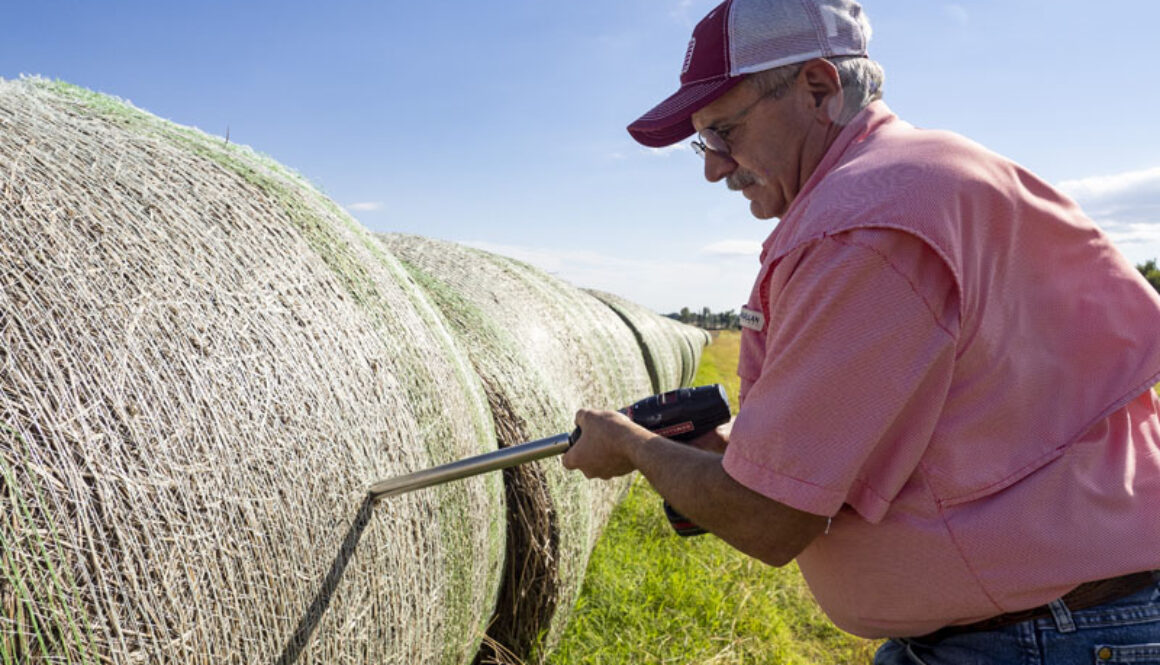
Why Your Hay May Fail Quality Tests — and How to Fix Recurring Issues.
Failing a hay quality test can be frustrating — especially when the hay looks good. Unfortunately, appearance alone doesn’t guarantee nutritional performance, and lab results often reveal hidden issues that affect marketability and price.
Understanding why hay fails quality tests is the first step toward producing consistent, premium-grade forage.
The Most Common Reasons Hay Fails Quality Tests
Cutting at the Wrong Stage of Maturity
Maturity has the single biggest impact on forage quality.
When hay is cut too late:
- Fiber levels increase
- Protein declines
- Digestibility drops sharply
Even a delay of a few days can push hay below buyer specifications.
Excessive Stem Content
High stem-to-leaf ratios reduce:
- Crude protein
- Energy availability
- Palatability
This is especially critical for horse owners and dairy buyers.
Weather Damage During Drying
Rain, heavy dew, and prolonged drying periods leach soluble nutrients.
Common test impacts:
- Lower sugar content
- Reduced energy values
- Increased mold risk
Soil Contamination (High Ash Content)
Dragging hay across the soil introduces dirt and sand, inflating ash levels and reducing feed value.
Causes include:
- Raking too low
- Cutting too short
- Uneven fields
Improper Storage Conditions
Even high-quality hay can fail tests if it absorbs moisture in storage.
Signs include:
- Elevated mold counts
- Heat damage
- Loss of color and aroma
Why “Good-Looking” Hay Still Tests Poorly
Visual cues like green color and soft texture don’t always reflect:
- Sugar levels
- Fiber digestibility
- Heat damage inside bales
Only laboratory analysis can reveal these hidden quality losses.
How to Fix Recurring Hay Quality Test Failures
Harvest at the Correct Growth Stage
Track plant development rather than calendar dates. Consistency matters more than speed.
Improve Drying Efficiency
- Use wide swaths
- Minimize unnecessary raking
- Avoid aggressive tedding
Faster drying preserves nutrients and sugars.
Reduce Mechanical Leaf Loss
Handle hay gently, especially in dry conditions.
This improves:
- Protein levels
- Energy values
- Buyer satisfaction
Control Moisture Before Storage
Target safe moisture levels before baling and monitor stacked hay closely during the first weeks of storage.
Using Test Results to Improve Future Cuttings
Don’t view test failures as setbacks — treat them as diagnostic tools.
Compare results across:
- Cuttings
- Fields
- Harvest methods
Patterns reveal which changes produce measurable improvements.
Final Thoughts
Hay quality test failures are rarely mysterious. They usually trace back to harvest timing, handling, or storage decisions that can be corrected with attention to detail.
Premium hay producers don’t just make hay — they manage quality intentionally from field to feed.
🔗 External Resources (Authoritative)
- Forage testing laboratories and interpretation guides
- University extension publications on forage quality
- USDA forage storage best practices